Original: $119.51
-70%$119.51
$35.85The Story
A Jelly & Spirits Superstar Shrub
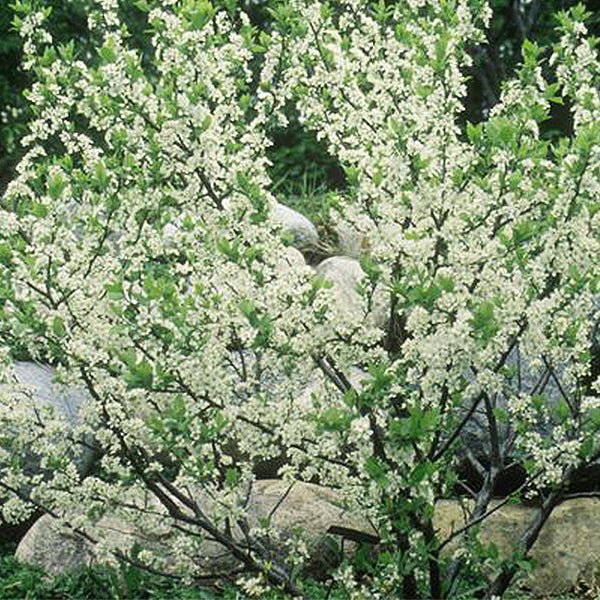
The Beach Plum (Prunus maritima) is a charming and rugged native fruiting shrubby tree naturally found along the Eastern Seaboard's dunes and sandy thickets. This round, dense shrub is a pollinator magnet, blooms profusely in spring, and produces small edible fruit in late summer.
Its white flowers appear in early May in sweet little clusters, occasionally turning pink after pollination. The foliage is green and glossy through summer, often turning golden or bronze in fall, while its gnarled branches give it winter interest. Growing up to 6 feet tall and just as wide, this suckering small tree or large shrub boasts a compact, mounding shape perfect for low hedges and wildlife gardens.
After flowering, the fruit sets in clusters, smaller than supermarket plums but packed with flavor. The tart, dusky purple fruit ripens in August and is famously used to make jams, jellies, sauces, cordials, and even infused in craft gin and vodka. Truly, a coastal treasure with culinary flair!
Since they are seed-grown and need cross-pollination, plant multiple shrubs or pair with other native Prunus species for better fruiting. Native to USDA Growing Zones 3 through 6, the Beach Plum is a fine choice for the forager, herbalist, or jelly enthusiast alike!
Key Features
- Edible fruit ripens in August, ½–¾ inch round, purple, tart-sweet
- Dense, rounded native shrub with white spring blooms
- Low maintenance and drought-tolerant once established
- Pollinator-attracting flowers (especially Native Bees!)
- Perfect for jams, jellies, liqueurs, gin and vodka infusions
- Needs cross-pollination with another Beach Plum or wild-type Prunus
- Excellent for coastal, sandy, or acidic soils
Landscaping Uses
Use Beach Plum as a 4-6 foot tall and wide fruiting shrub with a round, dense habit. Beach Plums' suckering habit makes them excellent for stabilizing slopes or tucking into the wilder corners of an edible landscape.
- Native hedgerows, mixed shrub borders, or informal hedges
- Wildlife and pollinator gardens
- Dune restoration, erosion control, and slope stabilization
- Edible landscaping and coastal foraging gardens
- Mixed shrub plantings in naturalized or coastal designs
- Front-of-house native foundation plantings
- Rock Gardens
- Coastal and seaside landscapes
Care and Maintenance
This is a deciduous, seed-grown fruiting shrub that's both tough and tenacious. It's drought-tolerant, salt-tolerant, and sun-loving, but does its best with a little nurturing early on.
Beach Plums are well adapted to drought, coastal winds, and sandy, acidic soils, though they'll thrive best with decent drainage and moderately fertile loam.
- Planting Time: Spring or fall
- Sun Needs: Full sun (6+ hours daily)
- Soil Needs: Prefers well-drained sandy or loamy soils; slightly acidic pH ideal; avoid heavy clay
- Moisture Needs: Moderate moisture when young; drought tolerant once established
- Arborist Mulch: Apply 3-4 inches of arborist mulch to retain moisture and suppress weeds
- Fertilization Needs: Light annual compost top-dressing is often enough; avoid heavy feeding
- Pruning Info: Prune in late winter to remove dead/damaged wood and improve air flow
- Renewal Pruning: Every 3-5 years, thin out the oldest stems for rejuvenation
- Division Info: Not applicable; propagate by seed or layering
- Chill Hours: Requires 800-1000 chill hours for best fruit set
- Pollination Needs: Must cross-pollinate with another Beach Plum seedling or wild Prunus for fruit
- Special Needs/Perks/Growing Tips:
- Deer-resistant
- Tolerates salty air and soil, handles coastal wind
- Pest and disease-resistant
- Supports pollinators
Description
A Jelly & Spirits Superstar Shrub
The Beach Plum (Prunus maritima) is a charming and rugged native fruiting shrubby tree naturally found along the Eastern Seaboard's dunes and sandy thickets. This round, dense shrub is a pollinator magnet, blooms profusely in spring, and produces small edible fruit in late summer.
Its white flowers appear in early May in sweet little clusters, occasionally turning pink after pollination. The foliage is green and glossy through summer, often turning golden or bronze in fall, while its gnarled branches give it winter interest. Growing up to 6 feet tall and just as wide, this suckering small tree or large shrub boasts a compact, mounding shape perfect for low hedges and wildlife gardens.
After flowering, the fruit sets in clusters, smaller than supermarket plums but packed with flavor. The tart, dusky purple fruit ripens in August and is famously used to make jams, jellies, sauces, cordials, and even infused in craft gin and vodka. Truly, a coastal treasure with culinary flair!
Since they are seed-grown and need cross-pollination, plant multiple shrubs or pair with other native Prunus species for better fruiting. Native to USDA Growing Zones 3 through 6, the Beach Plum is a fine choice for the forager, herbalist, or jelly enthusiast alike!
Key Features
- Edible fruit ripens in August, ½–¾ inch round, purple, tart-sweet
- Dense, rounded native shrub with white spring blooms
- Low maintenance and drought-tolerant once established
- Pollinator-attracting flowers (especially Native Bees!)
- Perfect for jams, jellies, liqueurs, gin and vodka infusions
- Needs cross-pollination with another Beach Plum or wild-type Prunus
- Excellent for coastal, sandy, or acidic soils
Landscaping Uses
Use Beach Plum as a 4-6 foot tall and wide fruiting shrub with a round, dense habit. Beach Plums' suckering habit makes them excellent for stabilizing slopes or tucking into the wilder corners of an edible landscape.
- Native hedgerows, mixed shrub borders, or informal hedges
- Wildlife and pollinator gardens
- Dune restoration, erosion control, and slope stabilization
- Edible landscaping and coastal foraging gardens
- Mixed shrub plantings in naturalized or coastal designs
- Front-of-house native foundation plantings
- Rock Gardens
- Coastal and seaside landscapes
Care and Maintenance
This is a deciduous, seed-grown fruiting shrub that's both tough and tenacious. It's drought-tolerant, salt-tolerant, and sun-loving, but does its best with a little nurturing early on.
Beach Plums are well adapted to drought, coastal winds, and sandy, acidic soils, though they'll thrive best with decent drainage and moderately fertile loam.
- Planting Time: Spring or fall
- Sun Needs: Full sun (6+ hours daily)
- Soil Needs: Prefers well-drained sandy or loamy soils; slightly acidic pH ideal; avoid heavy clay
- Moisture Needs: Moderate moisture when young; drought tolerant once established
- Arborist Mulch: Apply 3-4 inches of arborist mulch to retain moisture and suppress weeds
- Fertilization Needs: Light annual compost top-dressing is often enough; avoid heavy feeding
- Pruning Info: Prune in late winter to remove dead/damaged wood and improve air flow
- Renewal Pruning: Every 3-5 years, thin out the oldest stems for rejuvenation
- Division Info: Not applicable; propagate by seed or layering
- Chill Hours: Requires 800-1000 chill hours for best fruit set
- Pollination Needs: Must cross-pollinate with another Beach Plum seedling or wild Prunus for fruit
- Special Needs/Perks/Growing Tips:
- Deer-resistant
- Tolerates salty air and soil, handles coastal wind
- Pest and disease-resistant
- Supports pollinators